When your iPhone screen shatters, the first question on your mind is always, “How much will this cost?” The short answer: an iPhone screen repair through Apple typically ranges from $129 to $379. But here’s an insider tip for you: a reputable local repair shop can often perform the same high-quality repair for $90 to $230. The final price tag depends entirely on your iPhone model, where you take it for repair, and whether you have AppleCare+ coverage.
Your Guide to iPhone Screen Repair Costs
We’ve all experienced that heart-stopping moment when an iPhone slips from our grasp and hits the pavement. As you pick it up and see that spiderweb of cracks, the immediate concern is the cost.
The price isn’t a simple, one-size-fits-all number. It’s a lot like a car repair—fixing a minor scratch is vastly different from replacing an entire bumper on a luxury vehicle. The same logic applies to your iPhone screen.
The technology inside your display is the main driver of the cost. Screens with advanced features like ProMotion and Super Retina XDR are engineering marvels, but they are also more expensive to produce and, consequently, to replace. This is why fixing an older iPhone SE screen costs significantly less than replacing one on a top-tier Pro Max model.
Understanding Your Repair Options
To make the best financial decision, you need to know the three primary places you can go for a repair, each with its own benefits and costs.
- The Apple Store: This is the premium, official route. You’re guaranteed genuine Apple parts and certified technicians, but it comes at the highest price.
- Third-Party Repair Shops: This is where local, independent experts like Salvation Repair shine. We provide professional repairs using high-quality parts, often at a much more affordable price.
- AppleCare+: If you have this insurance plan, the cost is a simple, low service fee. For accidental damage, it’s the most budget-friendly option available.
To put it in perspective, fixing an iPhone SE (2022) screen costs about $129 at an Apple Store, while a new iPhone 15 Pro Max screen repair can hit $379. Third-party shops, on the other hand, consistently offer prices 30-40% lower, with screen repairs typically ranging from $90 to $230, depending on the model. This difference really highlights the premium you pay for official Apple parts versus excellent aftermarket alternatives. You can dig deeper into the world of phone screen repair costs to see how this plays out across different brands.
Estimated iPhone Screen Repair Cost By Model and Provider
To help you budget, here’s a breakdown of what you can generally expect to pay for some of the most common iPhone models. This table gives you a side-by-side look at the costs from Apple, a typical local repair shop, and what you’d pay with an active AppleCare+ plan.
| iPhone Model | Estimated Apple Store Cost (Out of Warranty) | Estimated Third-Party Shop Cost | AppleCare+ Service Fee |
|---|---|---|---|
| iPhone 15 Pro Max | $379 | $230 | $29 |
| iPhone 15 Pro | $329 | $200 | $29 |
| iPhone 15 | $279 | $180 | $29 |
| iPhone 14 Pro Max | $379 | $220 | $29 |
| iPhone 14 | $279 | $170 | $29 |
| iPhone 13 | $279 | $150 | $29 |
| iPhone 12 | $279 | $130 | $29 |
| iPhone 11 | $199 | $110 | $29 |
| iPhone SE (3rd Gen) | $129 | $90 | $29 |
Note: Prices are estimates and can vary. Always confirm the final cost with your chosen provider before starting a repair.
As you can see, the numbers speak for themselves. While AppleCare+ offers an unbeatable price if you’re already subscribed, a trusted third-party shop is often the most cost-effective option for out-of-warranty repairs.
This chart drives the point home, showing just how much your choice of provider impacts your wallet.
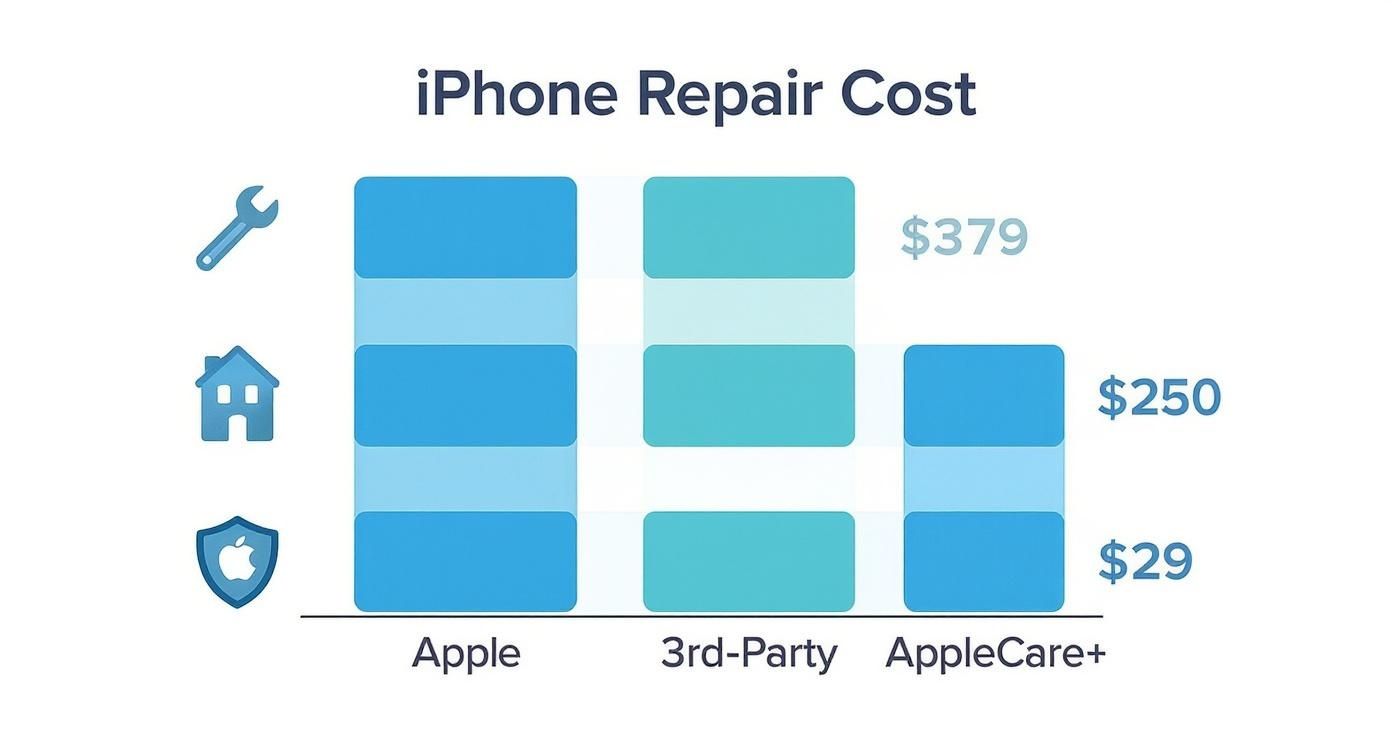
The takeaway is clear: while AppleCare+ is fantastic for those who have it, choosing a professional third-party repair shop can save you a significant amount of money without sacrificing quality.
Why Repair Prices Vary So Much
When you start calling around for an iPhone screen repair cost, the different prices you hear can be confusing. Why does one shop quote you a price that’s wildly different from another? The cost isn’t arbitrary; it’s a direct result of key factors that every customer should understand.
Think of it like getting a paint job for your car. You could go for a budget-friendly option that gets the job done, or you could pay for a premium, factory-finish that’s pricier but guarantees a perfect match. In the world of phone repair, this comes down to the quality of the parts, the technician’s skill, and the overhead of the business you choose.
Knowing what goes into the price tag empowers you to make a smart decision that fits your budget and quality expectations.
The Role of Replacement Parts
The single biggest factor that determines the final price is the screen itself. As a customer, you have two main options, and each has its own set of trade-offs.
- Original Equipment Manufacturer (OEM) Screens: These are the official screens from Apple. They guarantee perfect color, brightness, and full functionality of features like True Tone. Predictably, they also come with the highest price tag.
- High-Quality Aftermarket Screens: These parts are made by third-party manufacturers. While cheap, low-quality versions exist, a reputable shop will only use premium aftermarket screens that are virtually indistinguishable from the original. This offers a fantastic balance of performance and affordability.
The choice between an OEM and a premium aftermarket screen is the most significant decision impacting your final iPhone screen repair cost. It’s the difference between paying for a brand name and paying for performance that is often just as good.
This choice alone can change the final price by $50 to $100, sometimes even more, depending on your iPhone model.
Labor Costs and Repair Complexity
Next up is labor. Fixing a screen isn’t just a simple swap; it requires precision, expertise, and specialized tools. Newer iPhones, for example, have incredibly complex sensor arrays for features like Face ID that are electronically married to the original screen.
A skilled technician must carefully transfer these delicate components to the new display without a single error. One tiny mistake could permanently disable Face ID. That delicate work takes more time and skill, which is reflected in the labor cost. An older iPhone with simpler hardware is typically a faster, and therefore cheaper, repair.
Finally, the business model plays a part. An official Apple Store has significant corporate overhead, which gets passed down to you. Independent repair shops like Salvation Repair have more flexibility, allowing us to offer competitive pricing on top-tier parts and expert labor, giving you an affordable path back to a fully working iPhone.
OEM Screens vs Aftermarket Parts
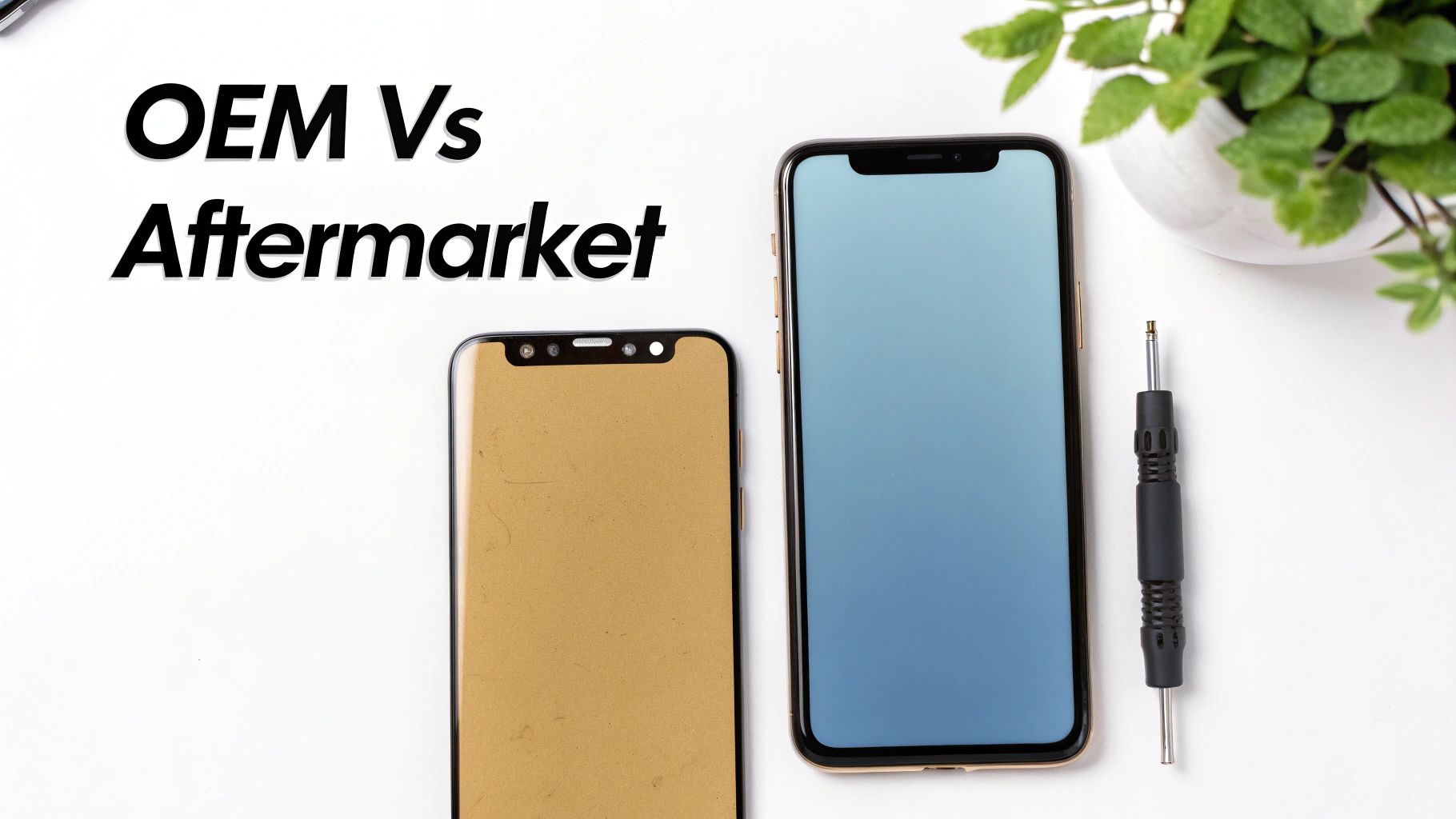
When it comes to your iPhone screen repair cost, the most important choice you’ll make is the type of replacement screen. Think of it like buying tires for your car. You can get the official, factory-spec tires for guaranteed performance at a premium price. Or, you could pick a high-quality alternative brand that performs almost identically for much less.
This is the core decision in the repair world. An Original Equipment Manufacturer (OEM) screen is the “official” part from Apple. It ensures perfect color, brightness, and flawless function for features like True Tone. It’s the exact same screen your iPhone had when it was new.
Aftermarket screens, on the other hand, exist on a wide spectrum of quality. It’s critical for you to understand that not all aftermarket parts are created equal.
The Aftermarket Quality Spectrum
This is where third-party repairs sometimes get a bad reputation. Low-end, bargain-bin screens are notorious for issues like washed-out colors, poor touch response, or an odd blueish tint. A cheap part almost always results in a cheap-feeling phone, a tradeoff that’s rarely worth the few dollars saved.
However, premium aftermarket screens are a different story entirely. A reputable shop like Salvation Repair sources high-quality “soft OLED” or “incell LCD” screens designed to match the original’s performance. For most users, the visual and functional difference between a premium aftermarket screen and an OEM one is practically impossible to spot.
Choosing a premium aftermarket screen from a trusted technician is one of the smartest ways to lower your iPhone screen repair cost without a noticeable drop in quality. It offers the best balance of performance and price.
This distinction is a huge part of the “Right to Repair” movement, which advocates for consumers and independent shops to have access to quality parts and information. You can learn more about how this impacts your repair options by exploring our detailed guide on the Right to Repair movement.
Making an Informed Decision
Knowing the difference between screen types puts you in control. When you get a repair quote, don’t hesitate to ask these direct questions:
- “Are you using an OEM or an aftermarket screen?”
- “If it’s aftermarket, can you tell me about its quality?”
- “Do you offer both options so I can choose?”
Any transparent, trustworthy repair shop will gladly explain their parts sourcing. They’ll help you choose an option that fits both your quality standards and your budget, ensuring you leave with a repair you’re completely satisfied with.
The Hidden Dangers of DIY Screen Repair
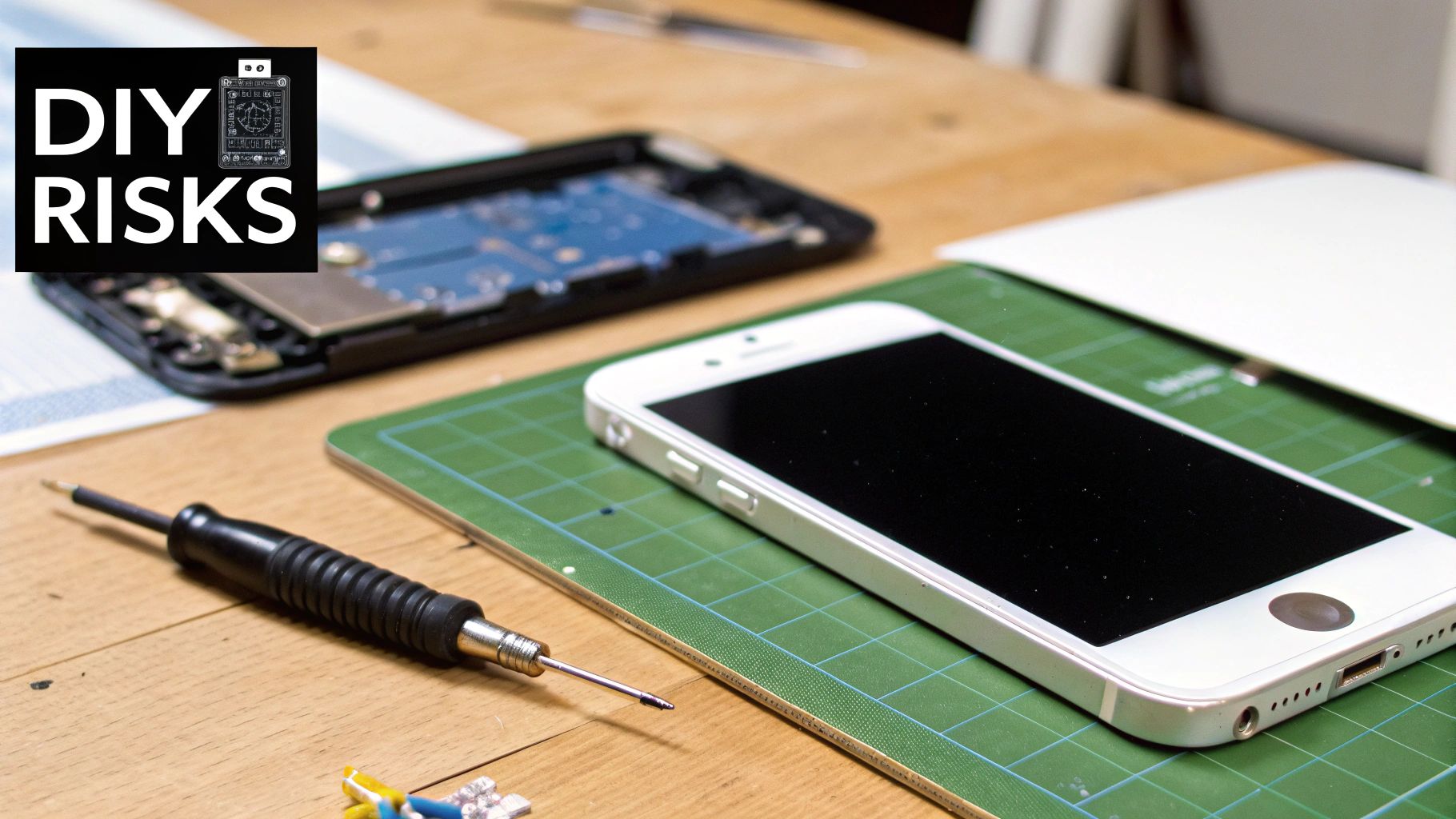
Those cheap DIY repair kits online can look very tempting, promising to slash your iPhone screen repair cost. But be warned: attempting this delicate procedure yourself is like performing surgery with a kitchen knife. The risk of causing irreversible damage is extremely high.
The biggest danger isn’t just cracking the new screen during installation. Modern iPhones are packed with fragile, interconnected components that are shockingly easy to break without specialized tools and training. A single slip of a screwdriver or a misplaced pry tool can turn a simple screen issue into a total device failure.
The Point of No Return
Here’s a critical fact most people don’t realize until it’s too late: key iPhone components, like the sensors for Face ID and Touch ID, are electronically paired to the device’s main logic board.
During a professional repair, a technician knows exactly how to transfer this sensitive sensor array to the new screen without damage. A common DIY mistake is tearing one of the tiny, paper-thin ribbon cables connected to these sensors. That single error permanently disables Face ID. There’s no going back.
A botched DIY repair can quickly become far more expensive than a professional fix. Accidentally damaging the Face ID sensor or a display cable means you’ll still have to pay a professional—but now for a much more complex and costly repair.
What started as an attempt to save money can easily end with a much larger bill or, even worse, a phone with permanently lost features.
Common DIY Repair Catastrophes
Beyond breaking key sensors, the list of potential DIY disasters is long and costly. The inside of an iPhone is a minefield of tiny screws of different lengths, and mixing them up can be catastrophic.
- Stripped Screws: Using the wrong screwdriver or too much force can strip a screw head, making it nearly impossible to remove without professional equipment.
- Long Screw Damage: This is a devastating mistake. Placing a long screw into a short hole can puncture the logic board directly underneath, destroying the phone’s “brain” and turning your device into a paperweight.
- Battery Punctures: The lithium-ion battery is highly volatile. Accidentally puncturing it can cause it to swell, smoke, or even catch fire, creating a serious safety hazard.
For most people, the high risk of causing irreversible damage makes professional repair the smarter, safer, and ultimately more cost-effective choice. It’s not just a service; it’s insurance against a much bigger headache.
How AppleCare and Warranties Can Save You a Fortune
A cracked screen feels like a financial emergency, but having the right protection plan can turn it into a minor inconvenience. Think of AppleCare+ as a dedicated insurance policy for your iPhone. It’s designed specifically for accidents like drops and spills that a standard manufacturer’s warranty won’t cover.
This coverage drastically reduces your out-of-pocket expense. For anyone with an active AppleCare+ plan, the cost to repair a screen drops from hundreds of dollars to just $29. That’s a massive reduction of over 90% compared to the out-of-warranty costs that can easily exceed $300.
Investing in a protection plan creates a powerful financial safety net. But Apple’s plan isn’t the only protection you should look for.
The Power of a Local Shop’s Warranty
Beyond AppleCare+, the warranty offered by your chosen repair shop is just as important. A trustworthy local technician will always stand by their work, and their warranty is your proof of that commitment. It’s your guarantee that the parts and labor meet a high standard of quality.
A solid repair warranty protects you if something goes wrong after you leave the shop. What if the new screen develops lines, dead pixels, or touch sensitivity issues a week later? A good warranty means you can bring it right back for a fix at no extra cost, ensuring the quality of your repair for the long term.
A repair shop’s warranty isn’t just a piece of paper; it’s their commitment to quality. It transforms your repair from a one-time transaction into a trusted service relationship, giving you complete confidence that your investment is protected.
That peace of mind is priceless. It ensures the money you spent delivers lasting results.
What a Good Warranty Should Cover
When choosing a repair service, always ask about their warranty. A comprehensive warranty is a sign of a shop that is confident in its parts and skills. Here’s what you should look for:
- Parts and Labor: The warranty should cover both the replacement screen and the technician’s workmanship.
- Duration: Look for a warranty that lasts at least 90 days. Top-tier shops, including us, often offer a lifetime warranty on specific parts, which is the gold standard.
- Clear Exclusions: The terms should clearly state what isn’t covered, which is almost always new accidental damage (like dropping the phone again).
At Salvation Repair, we believe in the quality of our work, which is why we provide a robust warranty on our services. You can learn more by checking out the specifics of our Salvation Repair warranty for total peace of mind.
Your Trusted iPhone Repair Partner in Laurel, MS
Understanding what an iPhone screen repair costs is the first step. The next is finding a local expert you can trust to do the job right. For residents in and around Laurel, Mississippi, Salvation Repair is that partner—we provide transparent, high-quality iPhone repairs without the hassle.
We believe the repair process should be simple and clear from the very beginning. That’s why we provide upfront pricing, so you never have to worry about hidden fees or surprises. We understand that every customer has different needs and a different budget.
To accommodate this, we give you choices. Our technicians will explain the pros and cons of both premium aftermarket and genuine OEM parts, empowering you to make the best decision for your device and your wallet. Our goal is always the same: get your iPhone back to you quickly, working perfectly.
Service Built Around Your Day, Not Ours
Life doesn’t stop just because your phone screen breaks. We’ve designed our service options to fit your busy schedule.
- Drop-Off Service: Visit our Laurel shop for the fastest possible turnaround. Most common repairs can be completed while you wait.
- Mobile Repair: We come to you! Our mobile service brings our expertise directly to your home or office, saving you a trip.
This focus on convenience is part of a growing trend. The global smartphone repair market is booming, projected to grow at a compound annual rate of 13.25% through 2032. More and more people are choosing to fix their devices instead of replacing them, which saves money and reduces e-waste. You can dig into the numbers and learn more about this growing market on einpresswire.com.
Why Laurel Chooses Salvation Repair
When you choose a local repair shop, you’re choosing a team that’s invested in your community. We’re your neighbors, not a faceless corporation, and we stand behind every screen we replace and every battery we install.
Your peace of mind is our top priority. Every single repair we do is backed by a solid warranty that covers both the parts and our labor. That gives you complete confidence in the quality and longevity of our work.
This guarantee is our promise that your investment is protected long after you leave our shop. It’s how we demonstrate our commitment to quality and customer satisfaction. Ready to get started? Get a free, no-obligation quote today and see how simple and affordable an iPhone repair in Laurel can be.
You can learn more about everything we offer by checking out our guide to Laurel phone repair.
Your iPhone Screen Repair Questions, Answered
We’ve covered what goes into the iPhone screen repair cost, from parts and labor to warranties. To wrap up, here are answers to the most common questions we hear from customers every day.
How Long Does an iPhone Screen Repair Take?
You’ll likely be surprised by how fast it is. For most popular iPhone models, a skilled technician can replace your screen in about 30 to 60 minutes. This means you can often have your phone repaired and back in your hands the same day, minimizing disruption to your life.
This quick turnaround is the result of experience. Screen replacement is a routine job for a professional who has the specialized tools and expertise to get it done efficiently and safely.
Will I Lose My Data During the Repair?
A standard screen replacement does not affect your personal data. The repair focuses on the display assembly, leaving the logic board and memory chips—where your photos, apps, and messages are stored—untouched. Your information should be completely safe.
That said, we always recommend backing up your iPhone to iCloud or a computer before any repair. It’s a simple, free precaution that provides total peace of mind in the unlikely event that something goes wrong.
Does a New Screen Affect Water Resistance?
This is an important question, and the honest answer is yes, it does. When the original screen is removed, the factory’s water-resistant seal is broken. A professional repair shop will apply a new adhesive seal to help protect against dust and minor splashes.
However, it’s important to have realistic expectations: no third-party repair can guarantee the device’s original factory IP rating. After a screen repair, it’s wise to be more cautious with your phone around water to prevent potential damage.
Ready to get your iPhone screen fixed without the guesswork? The team at Salvation Repair is here to help with fast, transparent, and reliable service right here in Laurel, MS. Get a free quote and book your repair today.

2 thoughts on “Decoding iPhone Screen Repair Costs: A Customer’s Guide”